


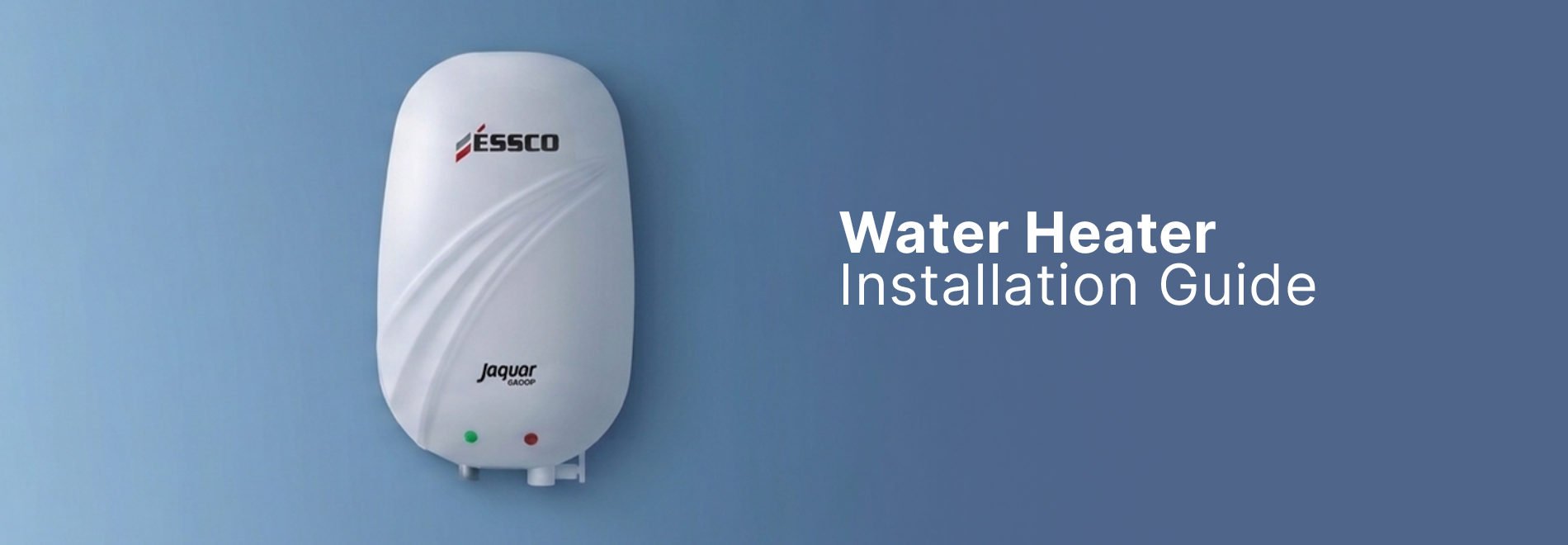
A water heater makes everyday tasks like bathing and washing much more comfortable, especially during colder months. But before buying one, you need to think about more than its capacity and price. The location, available space, plumbing connections and electrical safety all matter during installation.
A poorly planned installation can make the bathroom difficult to use and leave little room for future maintenance. This guide explains where to install a water heater, how much space to leave around it and what to check before getting started.
1. Where Should a Water Heater Be Installed in a Bathroom?
The best location depends on your bathroom layout, the type of water heater and the available plumbing connections. In many bathrooms, the heater is installed on a suitable wall near the shower or bathing area. This can help reduce the distance hot water needs to travel.
However, the heater should not be placed where it is directly exposed to shower spray or where water can reach electrical connections. The chosen location must meet the manufacturer's requirements for bathroom use, electrical protection and ventilation, where applicable.
Before finalising the position, consider these points:
- Water connections: Keep the heater reasonably close to the point of use, where practical.
- Wall strength: Make sure the wall and fixings can safely support the filled heater.
- Maintenance access: Leave enough room to inspect and service the unit.
- Electrical safety: Ensure the power supply, earthing and protective devices meet applicable requirements.
- Water exposure: Follow the manufacturer's instructions for safe placement in damp areas.
Plan the position before installing bathroom fittings or finishing the wall. Making changes later can add unnecessary work.
2. What Is the Ideal Height for Geyser Installation?
There is no single installation height that suits every water heater. The correct height depends on the model, its dimensions, the wall structure, the water connections and the manufacturer's installation instructions.
The heater should be positioned high enough to remain out of the way during normal bathroom use, but it must still be accessible for inspection and maintenance. Its position should also allow the pipes and electrical connections to be installed safely.
For wall-mounted models, use the mounting points and clearances specified by the manufacturer. Do not choose a height only because it looks good or keeps the unit out of sight.
A qualified installer can check the wall, mark the mounting points and confirm that the proposed location is suitable before drilling.
3. How Much Space Is Required to Install a Water Heater?
The space required depends on the type and size of the heater. A compact instant water heater generally takes up less room than a storage model with a tank.
For example, ESSCO lists instant water heaters with capacities of 1 litre water heater and 3 litres, along with storage models in several capacities. The dimensions differ between models, so the product specification should be checked before installation.
When measuring the available space, consider more than the heater's width and height. You should account for:
- The depth of the unit and the space it projects from the wall.
- The room needed for water pipes and electrical connections.
- The manufacturer's specified clearance around the heater.
- Access to valves and other components that may need servicing.
- The space required to remove or replace the unit in the future.
Avoid squeezing a heater into a narrow corner if doing so blocks access to its controls or connections. A little planning can make future maintenance much easier.
4. Can a Water Heater Be Installed in a Small Bathroom?
Yes, a water heater can be installed in a small bathroom if the selected model and installation location meet the required safety and clearance conditions.
A compact instant water heater may be worth considering when space is limited. Storage water heaters are another option, but their tank dimensions and mounting requirements need to be checked carefully.
ESSCO offers both instant and storage water heaters, allowing buyers to compare options based on capacity and available space. Check the specifications of the individual model before making a decision.
5. What Safety Precautions Should Be Followed During Installation?
Water heaters combine water, heat and, in many models, electricity. Correct installation is therefore essential.
Keep these precautions in mind:
- Use a qualified installer: A trained plumber and electrician can check the water connections, mounting arrangement and electrical supply.
- Check the wall and mounting hardware: The support must be suitable for the weight of the heater when it is filled with water.
- Ensure proper earthing: Electrical connections must meet applicable safety requirements. Suitable protective devices, such as an RCD or equivalent protection where required, should be installed by a qualified electrician.
- Follow the manufacturer's instructions: Use the specified pipes, valves, fittings and clearances. Do not remove or bypass safety components.
- Check the pressure-relief arrangement: Install the supplied or specified safety valve correctly. Never block its discharge outlet or ignore instructions about pressure and drainage.
- Keep connections protected from water: The installation must meet the required protection level for the location. Avoid placing electrical switches or connections where they can be splashed.
- Test the system before use: The installer should check for leaks, confirm correct operation and follow the manufacturer's procedure before switching on the heater.
ESSCO's published water heater range describes safety features such as a multi-function safety valve. The exact features and installation requirements vary by model, so always check the product documentation.
If the installation does not meet these conditions, choose another location. A qualified installer should assess the wall and proposed position before any work begins.
Conclusion
Installing a water heater requires careful planning. Start by choosing a suitable location, measuring the available space and checking the model's installation requirements. Then make sure the wall, plumbing and electrical connections are suitable.
Safety should always come before appearance or convenience. Use qualified professionals for installation, follow the manufacturer's instructions and leave enough access for future maintenance.
With the right planning, you can choose a water heater that fits your bathroom, meets your household's hot-water needs and can be used safely.
Frequently Asked Questions
1. Where should a water heater be installed in a bathroom?It should be installed in a suitable location near the point of use, where practical, with safe water and electrical connections. Keep it away from direct shower spray and allow access for maintenance.
2. What is the ideal height for geyser installation?There is no universal height. Follow the manufacturer's mounting instructions and ensure the heater remains accessible while meeting all required clearances.
3. How much space is required to install a water heater?The space depends on the model's dimensions and installation requirements. Allow room for pipes, electrical connections, safety components and future servicing.
4. Can a water heater be installed in a small bathroom?Yes. A compact model may work if the location meets the manufacturer's clearance and safety requirements and provides enough hot water for your needs.
5. What safety precautions should be followed when installing a water heater?Use qualified professionals, ensure proper earthing and electrical protection, secure the heater correctly, install safety valves as instructed and check all connections before use.
6. Can an electric water heater be installed above a bathroom door?It may be possible in some layouts, but the wall strength, mounting height, clearances and maintenance access must be checked first. A qualified installer should confirm whether the location is suitable.


