


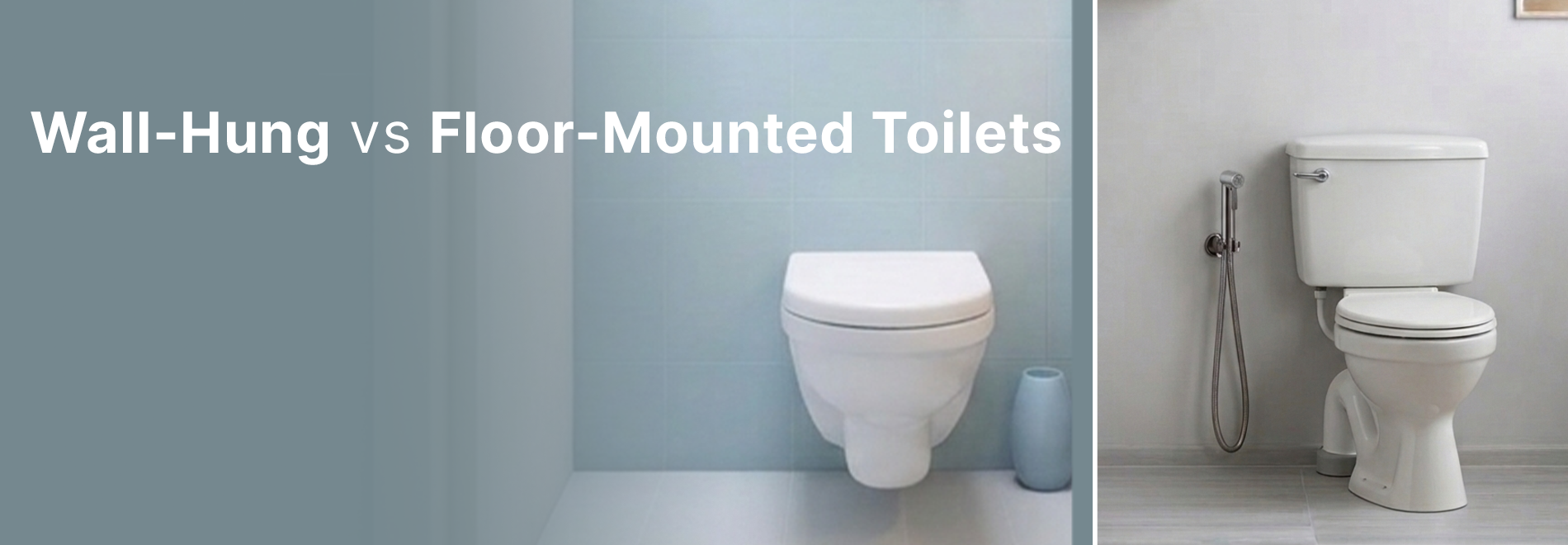
When planning a bathroom, choosing the right toilet is an important decision. It affects how much space you have, how easy the bathroom is to clean and how the overall design looks. Two common options are wall-hung toilets and floor-mounted toilets.
Both serve the same purpose, but their installation, appearance and maintenance requirements are different. Before choosing one, it helps to understand how each type works and what to consider for your bathroom.
1. What Is a Wall-Hung Toilet?
A wall-hung toilet is fixed to a strong supporting structure behind the wall. Its bowl does not touch the floor, leaving the area underneath open. The flushing tank is generally concealed behind the wall or inside a suitable installation system.
Wall-hung toilets are often considered for contemporary bathrooms and spaces where a less crowded appearance is preferred. However, the wall structure, plumbing and installation system must be suitable for this type of fitting.
Benefits of Wall-Hung Toilets
- Open floor space: The area beneath the bowl remains clear.
- Easy floor cleaning: You can clean underneath without working around a toilet base.
- Neat appearance: Concealed plumbing and flushing components create a cleaner look.
- Flexible installation height: The height can be planned according to the installation requirements and user needs.
2. What Is a Floor-Mounted Toilet?
A floor-mounted toilet is installed directly on the bathroom floor. It is a familiar choice in many homes and is available in different designs, including one-piece models and two-piece models with a separate flushing tank.
Floor-mounted toilets are available in different sizes and shapes, making it easier to compare options for various bathroom layouts.
Benefits of Floor-Mounted Toilets
- Familiar installation: The toilet is fixed to the floor using the appropriate fittings.
- Different designs: Options include one-piece and two-piece models.
- Less wall work in many installations: A suitable floor-mounted model may work with the existing arrangement.
- Easy product comparison: You can compare dimensions, flushing systems and designs before buying.
3. Wall-Hung vs. Floor-Mounted Toilets: Key Differences
The main difference is how the toilet is supported and installed. This also affects the use of space, cleaning and maintenance.
| Feature | Wall-Hung Toilet | Floor-Mounted Toilet |
|---|---|---|
| Installation | Fixed to a suitable wall support or frame | Fixed directly to the floor |
| Floor space | Leaves the floor beneath the bowl open | Occupies floor space around the base |
| Flushing tank | Commonly concealed | May be visible or incorporated into the design |
| Cleaning | Easier to clean beneath the bowl | Requires cleaning around the base |
| Installation work | Usually needs more planning and wall preparation | May be simpler when plumbing is already suitable |
| Maintenance access | May require access to concealed components | Components may be easier to reach, depending on the model |
| Appearance | Creates a clean, floating look | Offers a familiar, traditional appearance |
The best choice depends on your bathroom layout, installation budget and personal preference. Neither option is automatically better for every home.
4. Which Toilet Is Better for a Small Bathroom?
A wall-hung toilet can be a good option for a small bathroom because the open floor beneath it makes the room appear less crowded. It can also make mopping and cleaning the floor more convenient.
Remember that a wall-hung toilet still needs space for its supporting structure and flushing system. Concealing these components inside a wall may require additional planning. Compare the complete installation requirements rather than judging the design by the visible bowl alone.
5. Which Type Is Easier to Install?
Floor-mounted toilets are often easier to install when the existing drainage connection and plumbing are suitable. The toilet is secured to the floor, and the required connections are completed according to the manufacturer's instructions.
If you are replacing an existing toilet without changing the rest of the bathroom, a floor-mounted model may involve less alteration. However, the final decision should depend on the existing plumbing and the product specifications.
6. What Should You Check Before Buying?
Before making your final choice, consider these points:
- Bathroom size: Measure the available space and compare product dimensions.
- Plumbing: Check the drainage outlet and water connections.
- Installation: Understand whether wall preparation, a supporting frame or a new cistern is required.
- Cleaning: Think about how easily you can clean the bowl and the surrounding floor.
- Maintenance: Check how the flushing system and other components can be accessed.
- Budget: Consider the toilet, supporting components, installation work and future maintenance.
- Product details: Review the manufacturer's specifications and warranty terms.
ESSCO by Jaquar Group offers both wall-hung and floor-mounted WC options in its sanitaryware range. You can explore the ESSCO sanitaryware collection to compare available designs and check the details of individual products.
Conclusion
Choosing between wall-hung and floor-mounted toilets comes down to your bathroom space, installation requirements and daily needs.
A wall-hung toilet is worth considering if you prefer an open floor area, a clean appearance and easier access beneath the bowl. A floor-mounted toilet may be more suitable if you want a familiar design and a simpler replacement, provided the existing plumbing is compatible.
Take measurements, check the installation requirements and compare product specifications before buying. This will help you choose a toilet that fits your bathroom and remains convenient to use and maintain.
Frequently Asked Questions
1. What is the difference between wall-hung and floor-mounted toilets?
A wall-hung toilet is fixed to a supporting structure behind the wall, leaving the floor beneath it open. A floor-mounted toilet is secured directly to the floor.
2. Which is better: a wall-hung toilet or a floor-mounted toilet?
Neither is best for every bathroom. Wall-hung toilets offer an open floor area and a floating appearance, while floor-mounted models may be simpler to install when the existing plumbing is suitable.
3. Is a wall-hung toilet suitable for a small bathroom?
Yes, it can be suitable because the open floor beneath the bowl can make the room look less crowded. The concealed cistern and supporting frame still need adequate space.
4. Are wall-hung toilets more difficult to install than floor-mounted toilets?
They generally require more planning because the supporting frame, concealed cistern and plumbing must be installed correctly. Floor-mounted models may be simpler to fit when the existing connections match.
5. Which type of toilet is easier to clean and maintain?
Wall-hung toilets make it easier to clean the floor beneath the bowl. Floor-mounted toilets require cleaning around the base. Maintenance access depends on the design and installation of each model.
6. Do wall-hung toilets require a concealed cistern?
Wall-hung toilets generally use a concealed cistern and a suitable supporting system. Always check the product specifications to confirm compatibility and understand which components are included.


