


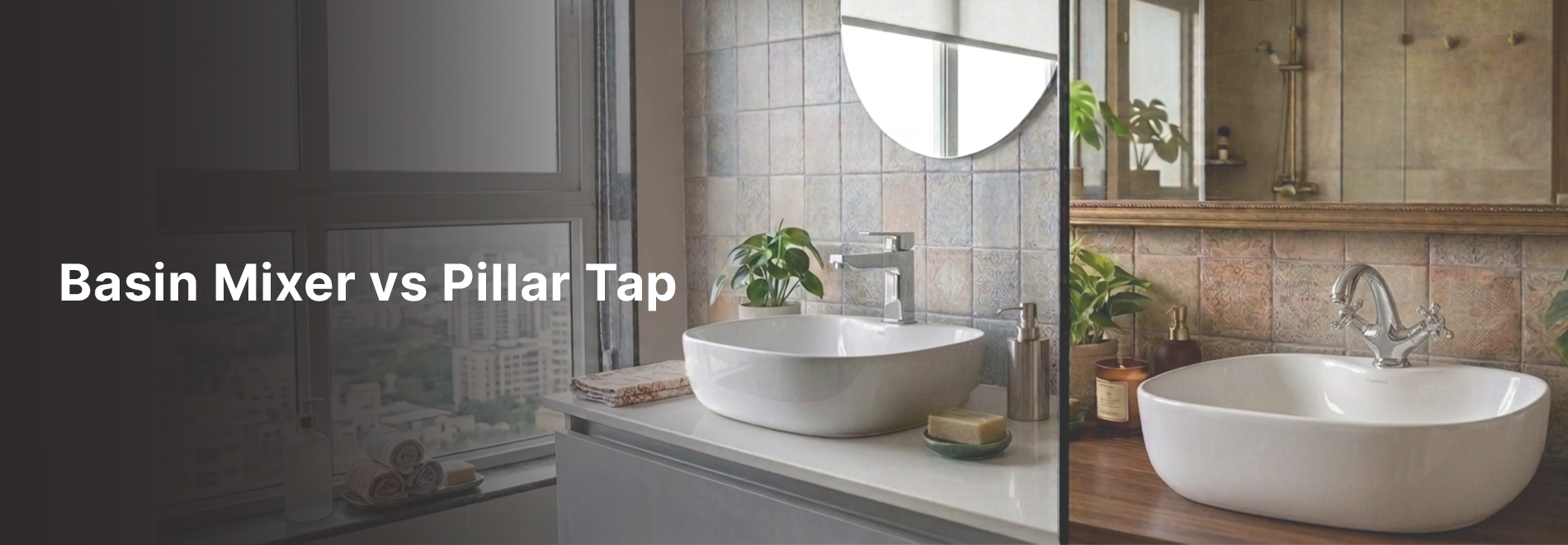
Choosing a tap for your wash basin may seem like a small decision. After all, both a basin tap and a mixer tap provide water. But once you start looking at different bathroom fittings, you will notice that there are quite a few options.
Two of the most common choices are a pillar tap and a basin mixer. Both have been used in homes for years, but they work in different ways and offer a different experience.
A pillar tap has a simple and familiar design, while a basin mixer combines hot and cold water through one outlet. So, which one should you choose?
There is no single answer for every bathroom. Your plumbing, available space, water supply, budget, and daily needs all matter. Let's look at the differences so you can make a more informed choice.
What Is a Pillar Tap?
A pillar tap is a simple type of wash basin tap that is installed directly on the basin or countertop. Usually, you have two separate taps—one for hot water and one for cold water.
It is a traditional option and is still used in many homes. The design is straightforward, which makes it easy to understand and operate.
If your bathroom has separate hot and cold water connections, pillar taps can be a practical choice.
They are often preferred because:
- The design is simple.
- Each water supply has a separate control.
- They are easy to operate.
- They can suit traditional bathroom designs.
Pillar taps are also available in different shapes and finishes, so choosing one does not mean giving up on style.
What Is a Basin Mixer?
A basin mixer tap combines hot and cold water through one spout. Instead of using two separate taps, you use one handle or two controls to adjust the water temperature and flow.
This makes the basin area look cleaner and less crowded.
A basin mixer is especially common in modern bathrooms because it offers convenient temperature control. You can adjust the water until it reaches the temperature you want without having to manage two separate streams.
This is one reason why mixer taps have become a popular choice for new homes and bathroom renovations.
Basin Mixer vs Pillar Tap: What Is the Difference?
The main difference is how the water is controlled.
With pillar taps, hot and cold water come through separate outlets. With a basin mixer, both supplies are combined and come out through one spout.
The choice can also change the look of your basin.
A pillar tap gives the wash area a more traditional appearance, while a basin mixer usually has a cleaner and more contemporary look.
Here are the basic differences:
| Feature | Pillar Tap | Basin Mixer |
| Water outlets | Separate | Single outlet |
| Temperature control | Separate taps | One mixer control |
| Design | Traditional | Modern |
| Installation | Simple | Depends on plumbing |
| Space around basin | More fittings | Cleaner appearance |
| Everyday use | Straightforward | Convenient |
Neither option is automatically better. It depends on what works for your bathroom.
Which Is Better for Daily Use?
If convenience is your main concern, a basin mixer can be a very comfortable option for everyday use.
You can control the water flow and temperature from one place. This is useful when you are washing your hands, brushing your teeth, or doing other small tasks at the basin.
A pillar tap is also easy to use, but you need to operate the hot and cold taps separately if you want to adjust the temperature.
For families, the choice may also depend on who uses the bathroom. Children and elderly family members may find a single-handle mixer easier to operate.
However, if you are already comfortable with pillar taps and have a simple plumbing setup, there may be no reason to change.
What Should You Consider Before Buying?
Don't choose a tap only because it looks good in a catalogue or showroom. The tap needs to work with your basin and plumbing.
Before buying a wash basin tap, check a few basic things.
1. Check Your Basin
Not every basin is designed for every type of tap.
Some basins have holes for separate pillar taps, while others are designed for a single mixer. Countertop basins may also require a taller mixer depending on their height.
2. Look at Your Plumbing
Your existing hot and cold water connections can influence your choice.
If you are replacing an old tap without changing the plumbing, check whether the new basin mixer tap can be installed with your existing setup.
3. Think About the Available Space
A pillar tap setup usually has two separate fittings. A mixer combines the controls into one fitting, which can make the basin area look less busy.
For a small bathroom, this cleaner appearance can make a noticeable difference.
4. Consider the Bathroom Style
Think about the other fittings in your bathroom.
If your bathroom has a traditional look, pillar taps can blend in naturally. If you have a modern basin with clean lines, a sleek basin mixer may be a better match.
Are Basin Mixers Better for Modern Bathrooms?
Modern bathroom design often focuses on simple shapes and fewer visible fittings. This is one reason basin mixer taps are commonly seen in contemporary bathrooms.
A mixer can give the basin area a neat and organised appearance. It can also work well with countertop basins, wall-mounted basins, and other modern designs.
But modern does not always mean better.
A well-designed pillar tap can also look excellent in a modern bathroom, especially when its finish and shape match the rest of the fittings.
The important thing is to choose a tap that works with the overall bathroom rather than choosing a style simply because it is trending.
Which Tap Uses Less Water?
Water usage depends on more than whether you choose a mixer or a pillar tap.
The amount of water used depends on how long the tap is left running, the water flow, and whether the tap has water-saving features such as an aerator.
A good-quality basin mixer tap with an efficient aerator can help control the flow while still providing a comfortable stream of water.
Pillar taps can also be water-efficient when used carefully.
So, instead of assuming that one type always saves more water, check the flow rate and features of the individual product.
What About Durability?
The material and internal components of the tap have a bigger impact on durability than the basic tap style.
A good-quality basin mixer or pillar tap should be able to handle regular use without becoming difficult to operate or developing leaks quickly.
Brass is commonly used for bathroom taps because it is strong and suitable for regular water exposure. The finish also matters, particularly in areas where hard water is common.
When comparing two taps, look at the quality of the product rather than simply choosing the cheaper one.
A tap that works smoothly for years is usually a better investment than one that needs frequent replacement.
Which One Is Easier to Maintain?
Both pillar taps and basin mixers are relatively easy to maintain when they are made well and installed correctly.
The main things to watch for are water deposits, leaks, and wear around the handles or cartridge.
Regular cleaning also helps keep the finish looking good.
For everyday care:
- Wipe the tap regularly with a soft cloth.
- Remove water marks before they build up.
- Avoid abrasive cleaning products.
- Check for leaks and loose connections.
If the tap develops a problem, the repair will depend on its design and the part that needs attention.
Can You Replace a Pillar Tap with a Basin Mixer?
Sometimes, yes—but it depends on your basin and plumbing.
A pillar tap setup usually has separate holes for the two taps, while a basin mixer normally needs a single suitable mounting point.
If the existing basin does not support a mixer, you may need to replace the basin or make changes to the installation. The plumbing connections may also need to be checked.
If you are unsure, it is better to have a plumber inspect the setup before buying a new tap.
So, Which One Should You Choose?
There is no universal winner between a pillar tap and a basin mixer tap.
Choose a pillar tap if you prefer a simple setup, already have separate connections, or like a more traditional bathroom style.
A basin mixer may be a better choice if you want easy temperature control, a cleaner basin area, and a modern appearance.
Before making the final decision, consider your basin, plumbing, available space, water supply, and the people who will use the bathroom every day.
Conclusion
Both pillar taps and basin mixers can be good choices for a wash basin. The right option comes down to what your bathroom needs and what feels comfortable for you.
A pillar tap keeps things simple, while a basin mixer tap offers convenient control and a more streamlined appearance. Whichever you choose, focus on good material, smooth operation, suitable installation, and easy maintenance.
For homeowners looking for reliable bathroom fittings, ESSCO offers a range of taps and basin solutions designed to bring together everyday functionality, durability, and modern bathroom style.
Frequently Asked Questions
What is the difference between a basin mixer and a pillar tap?
A pillar tap has separate outlets for hot and cold water, while a basin mixer combines hot and cold water through one spout. A mixer usually allows you to control the temperature from one fitting.
Which is better, a basin mixer or pillar tap?
It depends on your needs. A basin mixer is convenient and works well with modern bathrooms, while pillar taps are simple and practical, especially when separate hot and cold connections are already available.
Is a basin mixer better for daily use?
A basin mixer tap can be more convenient for daily use because you can control water flow and temperature from one fitting. However, the best option depends on your personal preference and plumbing setup.
Can I replace a pillar tap with a basin mixer?
It may be possible, but you first need to check the basin and plumbing. A basin mixer normally needs a suitable single mounting point, while pillar taps use separate holes.
Which tap uses less water, a mixer or pillar tap?
Neither type automatically uses less water. Water usage depends on the flow rate, how long the tap is used, and features such as an aerator. Both can be water-efficient when used properly.
Are basin mixers easy to maintain?
Yes. A good-quality basin mixer is generally easy to maintain. Regular cleaning, removing water deposits, and checking for leaks can help keep it working properly for a long time.


