




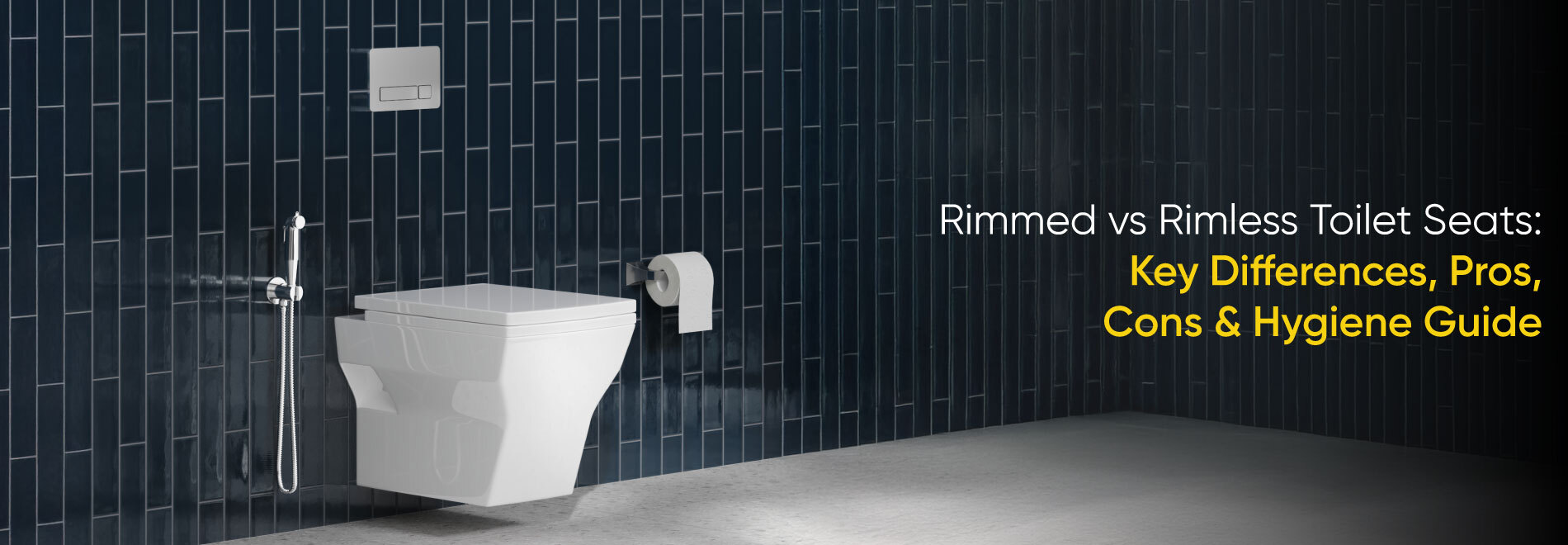
जब भी बाथरूम अपग्रेड की बात आती है, तो लोग अक्सर टॉयलेट के प्रकार पर ज्यादा ध्यान नहीं देते। लेकिन सही टॉयलेट चुनना बेहद जरूरी होता है क्योंकि इसका प्रभाव स्वच्छता, सफाई, आराम और रोजमर्रा के उपयोग पर पड़ता है। फ्लशिंग सिस्टम, बाउल डिज़ाइन और रिम्ड या रिमलेस तकनीक—ये सभी आपके बाथरूम के अनुभव को बेहतर या खराब बना सकते हैं।
पिछले कुछ वर्षों में रिमलेस टॉयलेट्स काफी लोकप्रिय हुए हैं क्योंकि वे आधुनिक, स्टाइलिश और अधिक हाइजीनिक माने जाते हैं। हालांकि, आज भी कई घरों में पारंपरिक रिम्ड WC का उपयोग किया जाता है। ऐसे में सवाल उठता है—आपके बाथरूम के लिए कौन-सा विकल्प बेहतर है?
आइए रिम्ड और रिमलेस टॉयलेट सीट्स के बीच के अंतर, उनके फायदे-नुकसान, इंस्टॉलेशन और हाइजीन के बारे में विस्तार से समझते हैं।
रिम्ड और रिमलेस टॉयलेट क्या होते हैं?
रिम्ड WC (Rimmed WC)
रिम्ड टॉयलेट में बाउल के अंदरूनी किनारे के नीचे एक छिपा हुआ चैनल होता है। फ्लश करने पर पानी इसी चैनल के माध्यम से बहता है और बाउल को साफ करता है। यह डिजाइन कई वर्षों से इस्तेमाल किया जा रहा है और आज भी घरों तथा सार्वजनिक स्थानों पर आमतौर पर देखा जाता है।
रिमलेस WC (Rimless WC)
रिमलेस टॉयलेट में अंदरूनी रिम नहीं होता। इसमें पानी सीधे ओपन जेट्स या चैनलों के माध्यम से पूरे बाउल में फैलता है, जिससे कोई छिपी हुई जगह नहीं बचती और सफाई अधिक प्रभावी होती है।
Essco जैसे प्रसिद्ध बाथवेयर ब्रांड्स आधुनिक डिजाइन ट्रेंड के अनुसार स्टाइलिश और कार्यक्षम रिमलेस WC उपलब्ध करा रहे हैं।
रिम्ड और रिमलेस टॉयलेट्स के बीच मुख्य अंतर
फीचररिम्ड WCरिमलेस WCफ्लशिंग सिस्टमपानी छिपे हुए रिम चैनल से बहता हैपानी सीधे ओपन जेट्स से आता हैसफाईरिम के नीचे साफ करना मुश्किलबिना छिपी सतह के आसानी से साफहाइजीनबैक्टीरिया और लाइमस्केल जमा हो सकते हैंअधिक स्वच्छ और हाइजीनिककीमतअपेाकृत सस्ताथोड़ा महंगाडिजाइनपारंपरिक और सामान्यमॉडर्न और मिनिमलपानी के छींटेछींटे कम पड़ते हैंखराब डिजाइन में छींटे आ सकते हैंपानी की बचतडिजाइन पर निर्भरऑप्टिमाइज्ड जेट्स से बेहतर पानी बचत
रिम्ड टॉयलेट्स के फायदे और नुकसान
रिम्ड टॉयलेट्स के फायदे
कम कीमत
रिमलेस मॉडल की तुलना में अधिक किफायती।
कम छींटे
रिम पानी को नियंत्रित रखने में मदद करता है।
कई विकल्प उपलब्ध
विभिन्न आकार, डिजाइन और मॉडल्स में उपलब्ध।
रिम्ड टॉयलेट्स के नुकसान
सफाई में कठिनाई
रिम के नीचे गंदगी, लाइमस्केल और बैक्टीरिया जमा हो सकते हैं।
ज्यादा केमिकल्स की जरूरत
इन्हें साफ रखने के लिए बार-बार स्क्रबिंग और मजबूत क्लीनर की आवश्यकता पड़ती है।
कम हाइजीनिक
छिपी हुई सतहों पर कीटाणु आसानी से जमा हो सकते हैं।
रिमलेस टॉयलेट्स के फायदे और नुकसान
रिमलेस टॉयलेट्स के फायदे
बेहतर हाइजीन
कोई छिपा हुआ हिस्सा नहीं होने के कारण बैक्टीरिया जमा नहीं होते।
आसान सफाई
सिर्फ एक हल्के ब्रश स्ट्रोक से सफाई हो जाती है।
आधुनिक डिजाइन
स्लीक और मिनिमल डिजाइन आधुनिक बाथरूम के लिए उपयुक्त।
पानी की बचत
फ्लश जेट्स पूरे बाउल को प्रभावी तरीके से साफ करते हैं।
वॉल-हंग डिजाइन के लिए आदर्श
रिमलेस बाउल आधुनिक “फ्लोटिंग” लुक को और आकर्षक बनाते हैं।
रिमलेस टॉयलेट्स के नुकसान
थोड़ी अधिक कीमत
रिम्ड WC की तुलना में थोड़े महंगे।
छींटों की संभावना
खराब इंजीनियरिंग वाले मॉडल्स में पानी के छींटे आ सकते हैं।
कुछ क्षेत्रों में सीमित विकल्प
हालांकि लोकप्रियता बढ़ रही है, लेकिन कुछ बाजारों में विकल्प कम हो सकते हैं।
हाइजीन गाइड: कौन ज्यादा स्वच्छ है?
स्वच्छता के मामले में रिमलेस WC स्पष्ट रूप से बेहतर विकल्प माने जाते हैं। बिना रिम के डिजाइन के कारण गंदगी, बैक्टीरिया और लाइमस्केल जमा होने की संभावना कम होती है।
रिमलेस टॉयलेट्स:
साफ करना आसान होते हैं
कम केमिकल्स की जरूरत होती है
अधिक हाइजीनिक होते हैं
वहीं रिम्ड टॉयलेट्स को साफ रखने के लिए अधिक मेहनत और नियमित सफाई की आवश्यकता होती है।
यदि आपकी प्राथमिकता साफ-सुथरा और हाइजीनिक बाथरूम है, तो Essco का रिमलेस डिजाइन एक बेहतरीन विकल्प हो सकता है।
क्या रिमलेस टॉयलेट ज्यादा पानी इस्तेमाल करते हैं?
कई लोगों का मानना है कि रिमलेस टॉयलेट्स अधिक पानी इस्तेमाल करते हैं, लेकिन यह पूरी तरह सही नहीं है।
अधिकांश आधुनिक रिमलेस टॉयलेट्स पानी की बचत को ध्यान में रखकर डिजाइन किए जाते हैं। इनके शक्तिशाली फ्लश जेट्स पूरे बाउल को कम पानी में साफ कर देते हैं।
इसके विपरीत, खराब डिजाइन वाले रिम्ड टॉयलेट्स में कई बार दोबारा फ्लश करना पड़ सकता है।
इसलिए लंबे समय में रिमलेस टॉयलेट्स अधिक पानी बचाने में मदद कर सकते हैं।
कीमत और बजट
रिमलेस टॉयलेट्स अपनी एडवांस डिजाइन और तकनीक के कारण थोड़ा महंगे होते हैं। हालांकि, उनकी आसान सफाई, कम पानी की खपत और लंबे समय तक टिकाऊ प्रदर्शन के कारण यह निवेश फायदेमंद साबित हो सकता है।
टॉयलेट सीट का आकार और साइज़
रिम्ड और रिमलेस टॉयलेट चुनते समय सीट का आकार भी महत्वपूर्ण होता है।
राउंड बाउल
छोटे बाथरूम के लिए उपयुक्त और कॉम्पैक्ट डिजाइन।
एलॉन्गेटेड बाउल
अधिक आरामदायक, विशेषकर बड़े बाथरूम के लिए।
D-शेप सीट्स
आधुनिक विकल्प जो अक्सर रिमलेस वॉल-हंग टॉयलेट्स के साथ उपयोग किए जाते हैं।
सॉफ्ट-क्लोज सीट्स
शोर कम करने और बेहतर सुविधा के लिए लोकप्रिय।
खरीदने से पहले हमेशा सीट के डाइमेंशन और फिटिंग की जांच जरूर करें।
वॉल-हंग टॉयलेट्स और इंस्टॉलेशन
आजकल वॉल-हंग टॉयलेट्स काफी लोकप्रिय हो रहे हैं क्योंकि वे स्पेस बचाते हैं और मॉडर्न लुक देते हैं। रिमलेस डिजाइन इनके साथ बेहद आकर्षक दिखाई देता है।
इंस्टॉलेशन टिप्स
मजबूत फ्रेम
इन-वॉल फ्रेम की लोड-बेयरिंग क्षमता सुनिश्चित करें।
सही प्लंबिंग अलाइनमेंट
लीकेज और पानी के छींटों से बचने के लिए सटीक इंस्टॉलेशन जरूरी है।
फ्लश सिस्टम कम्पैटिबिलिटी
ड्यूल फ्लश सिस्टम रिमलेस बाउल्स के साथ बेहतर काम करते हैं।
सही सीट फिटिंग
स्लिम सॉफ्ट-क्लोज सीट्स आराम और स्टाइल दोनों बढ़ाती हैं।
निष्कर्ष
रिम्ड और रिमलेस टॉयलेट के बीच चुनाव आपकी जरूरतों और प्राथमिकताओं पर निर्भर करता है।
यदि आपका मुख्य फोकस बजट और पारंपरिक डिजाइन है, तो रिम्ड WC आपके लिए सही हो सकता है। लेकिन यदि आप आधुनिक, स्वच्छ और कम रखरखाव वाला बाथरूम चाहते हैं, तो रिमलेस टॉयलेट बेहतर विकल्प साबित होगा।
Essco जैसे ब्रांड स्टाइल, टिकाऊपन और आधुनिक तकनीक को मिलाकर शानदार रिमलेस डिजाइन उपलब्ध करा रहे हैं। चाहे आप वॉल-हंग टॉयलेट चुनें या क्लासिक वन-पीस मॉडल, रिमलेस तकनीक आपके बाथरूम को अधिक उपयोगी और आकर्षक बनाती है।
आखिरकार, रिमलेस टॉयलेट केवल एक डिजाइन अपग्रेड नहीं बल्कि बेहतर स्वच्छता, आराम और मानसिक संतुष्टि में निवेश है। Essco by Jaquar उन लोगों के लिए आदर्श विकल्प है जो आधुनिक डिजाइन और भरोसेमंद गुणवत्ता दोनों चाहते हैं।
FAQs
Q1. रिम्ड और रिमलेस टॉयलेट सीट्स में क्या अंतर है?
रिम्ड WC में बाउल के किनारे के नीचे एक छिपा हुआ चैनल होता है जिससे पानी बहता है, जबकि रिमलेस WC में पानी सीधे जेट्स के माध्यम से आता है।
Q2. कौन-सा टॉयलेट ज्यादा हाइजीनिक होता है—रिम्ड या रिमलेस?
रिमलेस टॉयलेट अधिक हाइजीनिक माने जाते हैं क्योंकि इनमें कोई छिपी सतह नहीं होती जहां बैक्टीरिया जमा हो सकें।
Q3. क्या रिमलेस टॉयलेट्स रिम्ड टॉयलेट्स से ज्यादा महंगे होते हैं?
हाँ, आमतौर पर रिमलेस टॉयलेट्स 10–15% तक महंगे होते हैं, लेकिन उनकी बेहतर कार्यक्षमता और कम रखरखाव लंबे समय में फायदेमंद साबित होता है।


