


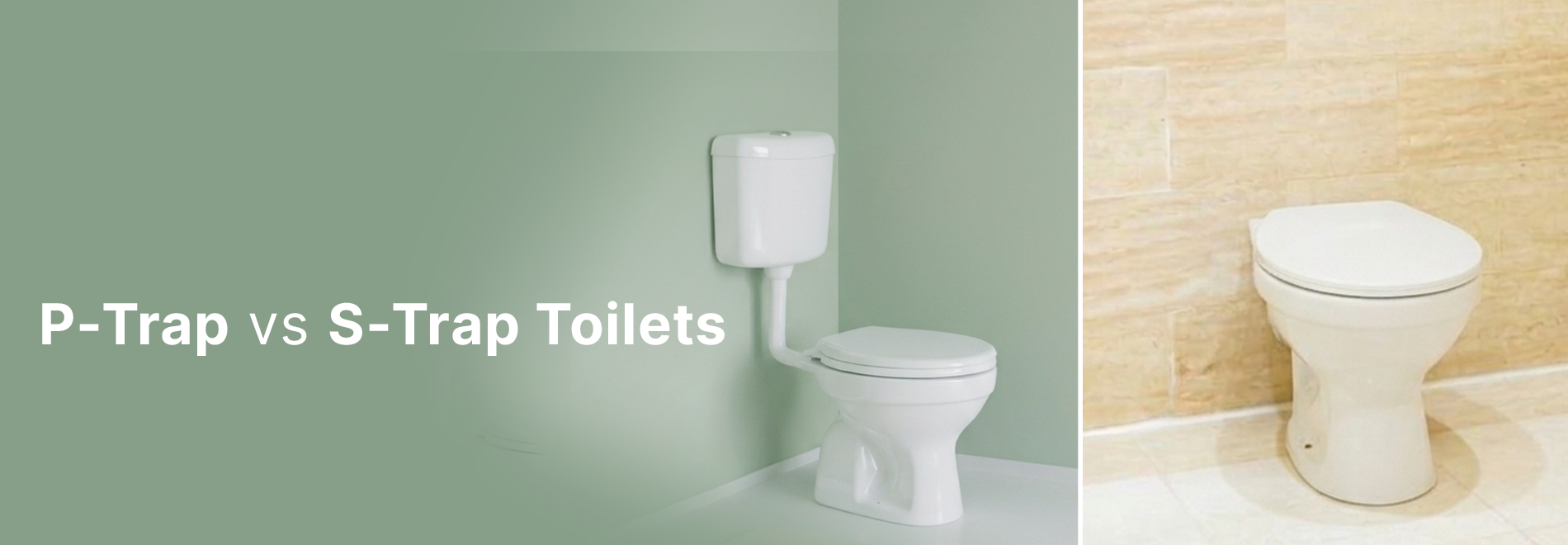
When choosing a toilet for your bathroom, the design and appearance are not the only things to consider. The drainage connection is equally important. If the toilet outlet does not match your bathroom's plumbing, installation can become difficult and may require additional changes.
This is where P-trap and S-trap toilets come in. Both are common outlet types used in bathroom sanitaryware, but they connect to the drainage system differently. Understanding the difference will help you select a toilet that suits your bathroom layout and existing plumbing.
1. What Is a P-Trap Toilet?
A P-trap toilet has a horizontal outlet that connects to a drainage pipe through the wall. It is generally used in bathrooms where the waste pipe exits through the wall behind the toilet.
The outlet arrangement allows waste to move into the drainage system. The trap also helps prevent unpleasant sewer gases from entering the bathroom when the plumbing system is installed and maintained correctly.
P-trap toilets are commonly considered for bathrooms designed with wall drainage. However, the outlet position and measurements must match the existing plumbing before installation.
Key Things to Know About P-Trap Toilets
- Wall drainage: The outlet connects to a drainage pipe through the wall.
- Horizontal outlet: Wastewater moves towards the wall connection.
- Plumbing compatibility: The outlet height and position must match the drainage point.
- Installation planning: Measurements should be checked before purchasing the toilet.
2. What Is an S-Trap Toilet?
An S-trap toilet has a downward-facing outlet that connects to a drainage pipe through the floor. It is generally suitable for bathrooms where the waste pipe is positioned beneath the toilet. The outlet arrangement allows waste to pass into the floor drainage connection. Like a P-trap, the trap helps prevent sewer gases from entering the bathroom.
S-trap toilets are commonly used in bathrooms with floor drainage. Before selecting one, check the position of the floor outlet and the distance between the wall and the drainage connection.
Key Things to Know About S-Trap Toilets
- Floor drainage: The outlet connects to a drainage pipe beneath the toilet.
- Vertical outlet: Wastewater moves down towards the floor connection.
- Floor outlet position: The drainage point must align with the toilet's outlet.
- Installation planning: The outlet measurements should be confirmed before fitting.
3. P-Trap vs. S-Trap Toilets: What Is the Difference?
The main difference between P-trap and S-trap toilets is the direction of their drainage connections. A P-trap toilet generally connects to a wall outlet, while an S-trap toilet connects to a floor outlet.
| Feature | P-Trap Toilet | S-Trap Toilet |
|---|---|---|
| Outlet direction | Horizontal | Downward |
| Drainage connection | Through the wall | Through the floor |
| Common application | Bathrooms with wall drainage | Bathrooms with floor drainage |
| Main measurement to check | Wall outlet height and position | Floor outlet position and set-out |
| Installation requirement | Outlet must align with the wall pipe | Outlet must align with the floor pipe |
Neither type is automatically better than the other. The suitable option depends mainly on your bathroom's drainage arrangement and the specifications of the toilet you plan to install.
4. How to Choose Between a P-Trap and an S-Trap Toilet
Before buying a toilet, check the drainage connection in your bathroom. This simple step can help you avoid installation problems later.
If the waste pipe exits through the wall, a P-trap toilet may be suitable. If the pipe is located beneath the toilet and connects through the floor, an S-trap model may be the better option. For a new bathroom, decide on the drainage layout before finalising the sanitaryware. This gives your plumber a chance to plan the connections according to the chosen toilet's specifications.
5. Which Toilet Trap Is Suitable for Floor Drainage?
An S-trap toilet is generally suitable for floor drainage because its outlet connects downwards to the waste pipe beneath the toilet.
The position of the floor outlet is particularly important. The distance between the wall and the drainage point must match the toilet's installation requirements.
If you are renovating an older bathroom, check the existing outlet before selecting a replacement. Choosing a compatible model can help reduce unnecessary changes to the plumbing.
6. What Should You Check Before Buying a P-Trap or S-Trap Toilet?
Apart from the outlet type, consider a few other details before making your purchase.
- Bathroom measurements: Check the available space and the position of the drainage pipe.
- Product dimensions: Review the toilet's size and outlet measurements in the manufacturer's specifications.
- Installation requirements: Confirm whether any additional fittings or plumbing changes are needed.
- Design and comfort: Choose a shape and size that suit your bathroom and everyday requirements.
- Cleaning and maintenance: Consider the toilet's design and follow the manufacturer's cleaning instructions.
- Warranty and product details: Check the warranty terms and confirm which components are included with the product.
ESSCO by Jaquar Group offers a range of sanitaryware options, including wall-hung and floor-mounted WCs. You can explore the ESSCO sanitaryware collection and check individual product specifications when comparing options. Always confirm the outlet type and measurements of the specific model before buying.
Conclusion
Choosing between a P-trap and an S-trap toilet becomes easier when you understand your bathroom's drainage layout. A P-trap toilet generally connects to a wall outlet, while an S-trap toilet connects to a floor outlet.
Before purchasing, check the outlet position, measurements and installation requirements. If you are unsure about your existing plumbing, ask a qualified plumber to inspect it.
Taking these steps will help you select sanitaryware that fits your bathroom properly and avoids unnecessary installation changes.
Frequently Asked Questions
1. What is the difference between a P-trap and an S-trap toilet?A P-trap toilet generally has a horizontal outlet that connects to wall drainage. An S-trap toilet has a downward-facing outlet that connects to floor drainage.
2. What is a P-trap toilet, and how does it work?A P-trap toilet connects to a waste pipe through the wall. Its trap helps prevent sewer gases from entering the bathroom while waste passes into the drainage system.
3. What is an S-trap toilet, and how does it work?An S-trap toilet connects to a waste pipe through the floor. Its downward-facing outlet directs waste into the drainage system, while the trap helps block sewer gases.
4. Which toilet trap is suitable for wall drainage?A P-trap toilet is generally suitable for wall drainage. The wall outlet's position and height must match the toilet's specifications.
5. Which toilet trap is suitable for floor drainage?An S-trap toilet is generally suitable for floor drainage. Check the floor outlet position and the required measurements before purchasing.


