




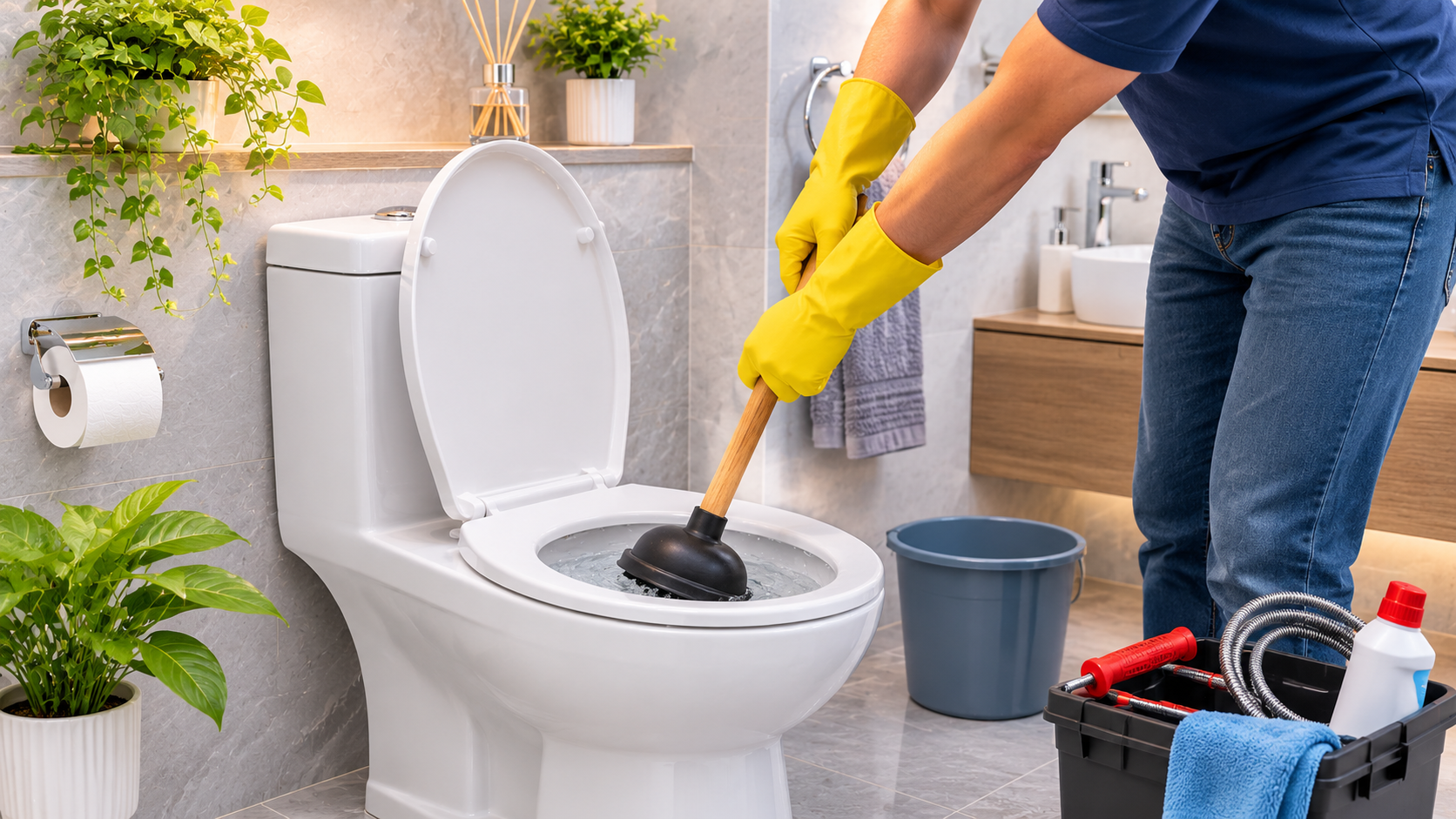
A clogged toilet is one of the most common and inconvenient plumbing problems in any household. Whether the water rises unusually high after flushing, waste takes longer than usual to drain or the toilet bowl refuses to empty completely, a blockage can quickly disrupt everyday bathroom use. If left unattended, it may also cause water overflow, unpleasant odours and potential damage to the surrounding bathroom area.
The good news is that most minor toilet blockages can be cleared using simple household tools and safe cleaning techniques. A plunger, toilet auger, warm water and suitable cleaning methods can often help restore normal drainage without requiring expensive plumbing repairs. However, the correct approach depends on the type of blockage, its location and the condition of your toilet's drainage system.
Understanding what causes a toilet blockage is equally important. Excessive toilet paper, sanitary products, wipes, foreign objects, accumulated waste and drainage problems can all prevent water from flowing through the toilet trap properly.
This guide explains how to unclog a toilet safely, explores different methods for clearing stubborn blockages, identifies common mistakes to avoid and explains when professional plumbing assistance is necessary.
Whether you are dealing with a partially blocked commode, a completely clogged toilet or a flush that causes water to rise instead of drain, these practical solutions will help you understand the problem and choose an appropriate method.
Table of Contents
- What Causes a Toilet to Get Clogged?
- How Does a Toilet Drainage System Work?
- Signs That Your Toilet Is Blocked
- How to Unclog a Toilet: Effective Methods
- How to Unclog a Toilet Without a Plunger
- How to Clear a Stubborn Toilet Blockage
- Common Toilet Unclogging Mistakes to Avoid
- How to Prevent Toilet Blockages
- Choosing the Right Toilet for Reliable Bathroom Performance
- When Should You Call a Professional Plumber?
- Frequently Asked Questions
What Causes a Toilet to Get Clogged?
A toilet blockage occurs when waste, toilet paper or other materials obstruct the normal flow of water through the toilet trap or connected drainage pipe.
Although toilets are designed to handle human waste and reasonable quantities of toilet paper, they are not intended to dispose of every type of household waste.
Several factors can contribute to a blocked toilet. Identifying the cause is important because different blockages require different solutions.
Excessive Toilet Paper
Using too much toilet paper in a single flush is one of the most common reasons for toilet blockages.
Toilet paper is designed to break down in water, but large quantities can temporarily accumulate inside the toilet trap and restrict the passage of water.
This is particularly common in toilets with older flushing mechanisms, restricted drainage or insufficient flushing performance.
Possible signs:
- Water drains more slowly than usual.
- The toilet bowl fills higher than normal after flushing.
- Waste remains visible inside the bowl.
- The toilet gradually returns to its normal water level.
Recommended solution: Allow the water level to settle and use a toilet plunger to dislodge the blockage. Avoid flushing repeatedly.
Flushing Wet Wipes and Sanitary Products
Wet wipes, sanitary pads, tampons, cotton products and similar materials should not be flushed down the toilet.
Unlike toilet paper, many of these products do not break down easily in water. They can become trapped inside the toilet trap or accumulate further along the drainage pipe.
Over time, this can create a stubborn blockage that is difficult to remove using ordinary plunging techniques.
Common items that should not be flushed include:
- Wet wipes and baby wipes
- Sanitary pads
- Tampons
- Cotton balls and cotton buds
- Facial tissues
- Paper towels
- Diapers
- Dental floss
- Hair and other fibrous materials
Recommended solution: If a foreign object is visible and safely reachable, remove it using appropriate gloves. If it has entered the toilet trap, a toilet auger or professional plumbing service may be required.
Flushing Foreign Objects
Small household objects can accidentally fall into the toilet bowl and become lodged inside the drainage passage.
Common examples include:
- Toilet freshener holders
- Plastic packaging
- Small toys
- Bathroom accessories
- Toothbrushes
- Air freshener components
- Cleaning cloths
These objects may create an immediate blockage or trap other waste materials over time.
Recommended solution: Avoid repeatedly flushing the toilet. If the object is visible, remove it carefully. If it has disappeared into the trap, use a suitable toilet auger or contact a plumber.
Blocked Toilet Trap
The toilet trap is the curved section of the toilet's drainage passage that retains water and prevents unpleasant sewer gases from entering the bathroom.
However, its shape can also make it a common location for blockages.
Excessive toilet paper, foreign objects and accumulated waste may become lodged in this section.
Common signs:
- Water drains slowly after flushing.
- The toilet makes unusual bubbling sounds.
- Waste remains inside the bowl.
- Plunging provides only temporary relief.
Recommended solution: Use a toilet plunger or closet auger designed specifically for toilet blockages. Avoid inserting sharp or rigid objects into the toilet.
Insufficient Flushing Performance
Sometimes the problem is not caused by something entering the drainage system but by the toilet failing to deliver sufficient water during flushing.
A weak flush may not carry waste through the toilet trap effectively.
Possible reasons include:
- Low cistern water levels.
- Faulty flush valve.
- Incorrectly adjusted flushing mechanism.
- Restricted water supply.
- Blocked rim outlets or flush passages.
- Problems with the toilet's internal flushing design.
Recommended solution: Check the cistern water level and flushing mechanism. If the toilet consistently produces a weak flush, have the system inspected rather than repeatedly attempting to clear the same blockage.
Blocked Main Drainage Pipe
In some situations, the blockage may not be inside the toilet itself.
A partially blocked drainage pipe or main sewer line can prevent wastewater from flowing away properly.
This may affect several plumbing fixtures in the house.
Warning signs:
- Multiple toilets drain slowly.
- Water backs up in bathroom floor drains.
- Gurgling sounds occur in different plumbing fixtures.
- Unpleasant drainage odours become noticeable.
- Water rises in one fixture when another is used.
Recommended solution: Stop using the affected fixtures and contact a qualified plumber. A main drainage blockage generally requires professional inspection and appropriate drain-cleaning equipment.
Quick Overview of Common Toilet Blockages
| Cause | Common symptoms | Recommended solution |
|---|---|---|
| Excessive toilet paper | Slow drainage | Use a plunger |
| Wet wipes and sanitary products | Persistent blockage | Toilet auger or professional removal |
| Foreign objects | Sudden complete blockage | Carefully retrieve or use an auger |
| Blocked toilet trap | Slow flushing and bubbling | Plunging or closet auger |
| Weak flushing mechanism | Waste does not clear completely | Inspect the cistern and flush system |
| Main drainage blockage | Multiple fixtures affected | Professional plumbing inspection |
How Does a Toilet Drainage System Work?
Understanding how a toilet works can make it easier to identify and resolve blockages.
Most conventional toilets use a flushing mechanism that releases stored water from the cistern into the bowl. The water carries waste through the toilet trap and into the connected drainage pipe.
The system relies on sufficient flushing volume, proper drainage and an unobstructed passage.
Main Components of a Toilet System
Toilet Bowl: The ceramic fixture that receives water and waste before they pass into the drainage system.
Toilet Trap: The curved internal passage that retains water and prevents sewer gases from entering the bathroom.
Flush Valve: The mechanism that releases water from the cistern into the toilet bowl.
Cistern or Flush Tank: The storage unit that holds water required for flushing.
Inlet Valve: The component that allows fresh water to enter the cistern after flushing.
Drainage Pipe: The pipe that carries wastewater away from the toilet and connects it to the building's drainage system.
Vent Pipe: The plumbing component that helps maintain appropriate air pressure within the drainage system and supports proper wastewater flow.
How the Flushing Process Works
| Stage | What happens |
|---|---|
| Flush activation | The flush button or handle activates the flushing mechanism. |
| Water release | Water flows from the cistern into the toilet bowl. |
| Waste movement | The water carries waste through the toilet trap. |
| Drainage | Wastewater enters the connected drainage pipe. |
| Trap refill | Clean water remains in the toilet trap, maintaining the water seal. |
| Cistern refill | The inlet valve refills the cistern for the next use. |
A blockage can interrupt this process at different points.
For example, an object trapped inside the toilet passage may prevent waste from reaching the drainage pipe. Similarly, a blocked drain line can cause water to back up into the bowl even when the toilet itself is functioning properly.
Understanding this distinction helps determine whether the problem can be resolved with basic tools or requires professional plumbing assistance.
Signs That Your Toilet Is Blocked
A toilet blockage does not always result in a completely non-functional toilet. In many cases, there are early warning signs that indicate restricted drainage.
Recognising these symptoms can help you address the issue before it becomes more serious.
Water Rises Higher Than Normal After Flushing
One of the clearest signs of a clogged toilet is water rising unusually high inside the bowl after flushing.
This usually indicates that water is entering the bowl faster than it can drain.
If this happens, do not flush again. Allow the water level to settle before attempting any repair.
Toilet Takes Longer to Drain
If the water level decreases slowly after flushing, there may be a partial obstruction inside the toilet trap or drainage pipe.
This can happen when toilet paper, waste or other materials restrict the flow of water.
Gurgling or Bubbling Sounds
Unusual bubbling or gurgling sounds may indicate restricted drainage or pressure changes inside the plumbing system.
If these sounds occur across multiple fixtures, the problem may involve the connected drainage line rather than an isolated toilet blockage.
Unpleasant Odours
A blocked toilet may retain waste and organic matter inside the drainage passage.
This can produce unpleasant odours, particularly when the blockage has been present for some time.
Persistent sewage smells may also indicate a drainage or plumbing issue that needs professional attention.
Water Backing Up Into Other Fixtures
If flushing the toilet causes water to rise in a shower drain, floor drain or another bathroom fixture, the blockage may be located in a shared drainage pipe.
This is a more serious warning sign and should not be treated as an ordinary toilet blockage.
How to Unclog a Toilet: Effective Methods
The most suitable method for unclogging a toilet depends on the type and severity of the blockage.
Minor blockages caused by toilet paper or organic waste may respond to a plunger or warm water. Stubborn blockages caused by foreign objects may require a toilet auger.
Before attempting any method, follow these safety precautions:
- Wear waterproof household gloves.
- Keep children and pets away from the affected area.
- Place old towels or absorbent cloths around the toilet.
- Ensure the water level is not close to overflowing.
- Avoid mixing cleaning chemicals.
- Never pour boiling water into a ceramic toilet bowl.
- Do not repeatedly flush a blocked toilet.
Method: Use a Toilet Plunger
A toilet plunger is one of the most effective tools for clearing common toilet blockages.
It works by creating pressure changes inside the toilet trap, helping dislodge materials that are restricting the flow of water.
A flange plunger is generally more suitable for toilets than a basic flat-bottom sink plunger because its extended rubber section is designed to fit into the toilet outlet.
How to use a toilet plunger:
- Put on protective gloves.
- Check the water level inside the bowl.
- If the bowl is nearly full, remove some water using a suitable container.
- Position the plunger over the toilet outlet.
- Ensure that the rubber cup creates a proper seal around the opening.
- Press down gently to remove trapped air.
- Move the plunger up and down using controlled, steady movements.
- Repeat the process several times without breaking the seal.
- Carefully remove the plunger.
- Observe whether the water begins draining normally.
If the blockage is caused by accumulated toilet paper or organic waste, this method may restore normal drainage.
Important: Avoid aggressive plunging if the toilet is cracked, unstable or already leaking. Excessive force can also cause contaminated water to splash outside the bowl.
Method: Use Warm Water and Dish Soap
Warm water combined with a small amount of dishwashing liquid may help loosen minor blockages caused by toilet paper and organic waste.
The soap helps reduce friction, while warm water may assist in softening materials inside the toilet trap.
This method is not suitable for solid objects, sanitary products or severe drainage obstructions.
How to use this method:
- Ensure the water level inside the toilet bowl is low enough to prevent overflow.
- Add a small quantity of liquid dish soap to the bowl.
- Allow it to sit for approximately 10–15 minutes.
- Prepare a bucket of warm water.
- Slowly pour the warm water into the bowl from a moderate height.
- Allow the water to settle.
- Check whether the blockage begins clearing.
- If the water drains normally, perform one controlled flush.
Important safety precautions:
- Use warm water, not boiling water.
- Avoid sudden temperature changes that could damage the ceramic.
- Do not use this method if the toilet is already close to overflowing.
- Do not combine dish soap with chemical drain cleaners.
This is a simple household method for minor blockages, but it may not work against compacted or solid obstructions.
Method: Use a Toilet Auger
A toilet auger, also called a closet auger, is a specialised plumbing tool designed to reach blockages inside the toilet trap.
Unlike an ordinary household wire, it has a protective sleeve and a flexible cable that can navigate the curved toilet passage.
It is particularly useful when plunging does not clear the obstruction.
How to use a toilet auger:
- Wear protective gloves.
- Position the auger's protective guide at the toilet outlet.
- Carefully feed the cable into the toilet trap.
- Rotate the handle according to the tool manufacturer's instructions.
- Apply gentle pressure as the cable moves through the curved passage.
- If you encounter resistance, rotate the handle carefully.
- Avoid forcing the cable through the obstruction.
- Withdraw the cable slowly.
- Remove any retrieved material safely.
- Check whether water drains normally.
A toilet auger can help break apart or retrieve certain blockages, depending on the object and its location.
When to use it: Consider a toilet auger when a plunger cannot clear a persistent blockage or when the obstruction appears to be lodged inside the toilet trap.
Avoid using an ordinary metal plumbing snake without suitable toilet protection because it can scratch the ceramic surface.
Method: Remove a Visible Foreign Object
If a small object has accidentally fallen into the toilet and is still visible, removing it manually may be the simplest solution.
However, hygiene and safety should always come first.
How to remove a visible object:
- Put on waterproof gloves.
- Ensure that the water level is manageable.
- Check whether the object is easily reachable.
- Remove it carefully without pushing it deeper into the toilet.
- Dispose of it appropriately.
- Clean and disinfect the affected area.
- Check whether the toilet drains normally.
If the object is lodged inside the toilet trap or cannot be reached safely, do not force it out using sharp tools.
A toilet auger or professional plumber may be required.
Method: Use a Wet/Dry Vacuum Designed for Liquid Extraction
A suitable wet/dry vacuum may help retrieve certain obstructions from an accessible toilet bowl or trap.
However, this method requires equipment specifically designed to handle liquid and potentially contaminated material.
Never use an ordinary household vacuum cleaner.
Basic precautions:
- Confirm that the equipment is rated for liquid extraction.
- Follow the manufacturer's instructions.
- Wear appropriate protective equipment.
- Remove excess standing water if required.
- Use the appropriate hose attachment.
- Avoid damaging the toilet surface.
- Disinfect the equipment and affected area after use.
This is generally a specialist household method rather than the first solution to try. A plunger or toilet auger is usually more practical for common blockages.
How to Unclog a Toilet Without a Plunger
Not every household has a toilet plunger readily available. Fortunately, some minor blockages can be addressed using alternative methods.
However, these alternatives are not equally effective, and their suitability depends on the type of obstruction.
Use Dish Soap and Warm Water
If the blockage consists mainly of toilet paper or organic waste, dish soap and warm water may help loosen it.
Add a small quantity of dish soap to the bowl, allow it to sit and slowly introduce warm water.
Wait for the water level to settle before attempting a controlled flush.
This method is more suitable for minor blockages than solid objects.
Allow the Blockage to Soften Naturally
Sometimes a toilet blockage caused by excessive toilet paper may gradually soften when left undisturbed.
If the water level is safe and there is no risk of overflow, waiting for approximately 20–30 minutes may allow some toilet paper to break down.
Once the water level returns to normal, try a suitable plunging method if available.
Do not assume that every blockage will clear naturally. Solid objects and non-flushable materials will generally remain trapped.
Use a Toilet Auger Instead
If a plunger is unavailable but the blockage appears to be located inside the toilet trap, a toilet auger is a more appropriate alternative than improvised household tools.
Its flexible cable is designed for toilet drainage passages and can reach obstructions that ordinary cleaning tools cannot.
Methods to Avoid When You Do Not Have a Plunger
Some commonly suggested household remedies are unsafe or unreliable.
Avoid:
- Pouring boiling water into the toilet bowl.
- Using sharp metal rods or coat hangers.
- Pushing objects into the toilet trap.
- Mixing vinegar, bleach and chemical cleaners.
- Using concentrated drain chemicals without confirming product compatibility.
- Repeatedly flushing to force the blockage through.
These approaches can damage the toilet, create chemical hazards or make the blockage worse.
How to Clear a Stubborn Toilet Blockage
Some toilet blockages cannot be resolved using basic household methods.
This is particularly true when foreign objects, compacted waste or obstructions deep inside the drainage pipe are involved.
The correct approach is to identify the obstruction and use an appropriate removal technique.
Check Whether the Blockage Is Inside the Toilet or Drainage Line
Before attempting further repairs, determine whether the problem affects only one toilet or multiple plumbing fixtures.
If other toilets, showers or floor drains are also draining slowly, the blockage may be located in the shared drainage system.
A single affected toilet is more likely to have an obstruction inside its own trap or connecting pipe, although this is not always the case.
Use a Closet Auger for Toilet-Trap Blockages
A closet auger is specifically designed for toilet drainage passages.
It can help retrieve foreign objects and loosen certain types of stubborn obstructions.
Use a model with a protective sleeve to minimise the risk of scratching the toilet's ceramic surface.
If the cable repeatedly encounters resistance or cannot reach the obstruction, stop rather than forcing it further.
Avoid Chemical Drain Cleaners
Chemical drain cleaners are not generally recommended as a first-line solution for clogged toilets.
Many conventional drain-cleaning products are formulated for particular pipe and drain applications, not necessarily for toilet traps.
Some contain caustic or corrosive ingredients that can cause injury, damage certain plumbing materials or create dangerous reactions when mixed with other cleaning products.
If a chemical product has already been poured into the toilet, inform the plumber before any further mechanical work is attempted.
Get Professional Drain Inspection
If the blockage continues despite appropriate plunging or augering, a professional plumber may need to inspect the drainage system.
Depending on the situation, the plumber may use:
- Professional drain snakes.
- Specialised toilet augers.
- Drain inspection cameras.
- Mechanical drain-cleaning equipment.
- Appropriate drain-cleaning and flushing techniques.
The equipment used will depend on the location, nature and severity of the blockage.
Common Toilet Unclogging Mistakes to Avoid
Attempting to clear a blocked toilet without understanding the problem can sometimes make the situation worse.
Avoiding a few common mistakes can help prevent unnecessary damage and reduce the risk of water overflow.
Flushing Repeatedly
One of the biggest mistakes is repeatedly pressing the flush button when the toilet is already blocked.
Each flush introduces more water into the bowl, increasing the risk of overflow.
If water is rising instead of draining, stop flushing immediately.
Using Boiling Water
Pouring boiling water into a ceramic toilet bowl is not recommended.
Sudden temperature changes can create thermal stress and potentially damage the ceramic surface.
Use only moderately warm water when attempting suitable household methods.
Using Sharp Metal Objects
Inserting wire hangers, rods or sharp tools into the toilet outlet can scratch the ceramic surface or damage the internal trap.
These objects may also push the blockage deeper into the drainage passage.
Use a toilet auger designed specifically for this purpose.
Mixing Cleaning Chemicals
Combining household cleaners can produce hazardous reactions.
For example, mixing bleach with acidic toilet cleaners or other incompatible products may release dangerous gases.
Never mix drain cleaners, bleach, vinegar or other cleaning products.
Follow the instructions on the product label and ensure adequate ventilation.
Ignoring Repeated Blockages
If the toilet becomes clogged frequently, repeatedly clearing it may only provide temporary relief.
Recurring blockages may indicate an underlying issue such as an obstructed drainage pipe, poor flushing performance, incorrect installation or problems with the building's plumbing system.
A professional inspection can help identify the actual cause.
Applying Excessive Force
Aggressive plunging or forcing an auger through an obstruction may damage the toilet or drainage components.
Use controlled pressure and stop if the tool encounters resistance that cannot be overcome safely.
Quick Guide: What Not to Do
| Mistake | Why it is problematic | Better approach |
|---|---|---|
| Repeated flushing | Can cause overflow | Stop flushing and inspect |
| Pouring boiling water | Can damage ceramic | Use moderately warm water where appropriate |
| Using sharp metal rods | May scratch or damage the toilet | Use a toilet auger |
| Mixing chemicals | Can release hazardous gases | Use one compatible cleaning product at a time |
| Forcing an auger | May damage the trap or tool | Apply controlled pressure |
| Ignoring repeated blockages | May conceal drainage problems | Arrange professional inspection |
How to Prevent Toilet Blockages
Preventing a toilet blockage is generally easier and less expensive than dealing with a major drainage problem.
A few simple bathroom habits can help maintain proper flushing performance and reduce the likelihood of recurring blockages.
Flush Only Toilet-Friendly Waste
The toilet should be used only for human waste and reasonable quantities of toilet paper.
Avoid flushing sanitary products, wet wipes, diapers, cotton products, dental floss and other non-flushable materials.
Even products labelled as flushable may not break down quickly enough for certain plumbing systems.
A small covered waste bin near the toilet is a practical way to dispose of these items.
Avoid Excessive Toilet Paper
Using excessive toilet paper in a single flush can contribute to blockages.
If a large amount is required, dividing it into smaller quantities and flushing appropriately can help reduce the risk.
Maintain Your Toilet's Flushing Mechanism
A toilet that does not release sufficient water may struggle to carry waste through the trap.
Periodically inspect the flushing mechanism for signs of wear, incorrect water levels or malfunctioning components.
Check the flush valve, fill valve and cistern water level where accessible.
If your toilet has recurring weak-flush problems, have the mechanism inspected.
Keep the Toilet Bowl Clean
Regular cleaning helps maintain bathroom hygiene and makes it easier to notice changes in water flow, drainage and visible deposits.
Use cleaning products that are compatible with your toilet's material and follow the manufacturer's instructions.
Avoid harsh tools that may scratch the ceramic surface.
Address Slow Drainage Early
If you notice that water is draining more slowly than usual, investigate the issue before the blockage becomes severe.
A minor obstruction may be easier to clear using a plunger than a fully blocked toilet.
Do not ignore recurring bubbling sounds or unusual water-level changes.
Schedule Plumbing Maintenance
Older plumbing systems may develop deposits, pipe obstructions or drainage problems over time.
Periodic inspection can help identify issues before they affect the entire bathroom drainage system.
For households with frequent blockages, a plumber can assess whether the problem is related to the toilet, connecting pipe or main drainage line.
Toilet Maintenance Checklist
| Maintenance activity | Recommended frequency |
|---|---|
| Observe toilet drainage after flushing | Regularly |
| Check for slow flushing | Weekly |
| Clean the toilet bowl | As per household cleaning routine |
| Inspect the flush mechanism | Every 3–6 months |
| Check accessible cistern components | Every 3–6 months |
| Inspect for recurring drainage problems | Whenever symptoms appear |
| Arrange professional plumbing inspection | When required |
These are general maintenance suggestions rather than mandatory service intervals. Actual requirements depend on toilet design, water quality, usage and manufacturer recommendations.
Choosing the Right Toilet for Reliable Bathroom Performance
A properly designed toilet with an effective flushing mechanism can contribute to convenient everyday use and easier bathroom maintenance.
When selecting a toilet for a new bathroom or renovation, consider more than just its appearance.
The flushing system, toilet design, installation requirements and compatibility with the existing drainage arrangement all influence performance.
Consider the Toilet Design
Different toilet designs offer different installation and maintenance characteristics.
Common options include:
- Floor-mounted toilets.
- Wall-hung toilets.
- One-piece toilets.
- Two-piece toilets.
- Different styles of western commodes.
For example, wall-hung toilets are installed with concealed cisterns, while many conventional floor-mounted models use exposed cisterns.
Your bathroom layout, available installation space and plumbing arrangement should guide the selection.
Explore Essco's range of Sanitaryware to understand the different toilet and bathroom fixture options available for residential spaces.
Select a Compatible Flushing System
The cistern and flushing mechanism should be compatible with the selected toilet.
A suitable flushing system should deliver the required water volume and support effective waste removal.
Consider factors such as:
- Flush mechanism design.
- Water consumption.
- Cistern compatibility.
- Availability of replacement components.
- Ease of maintenance.
- Installation requirements.
Explore the available Cisterns when evaluating flushing solutions for your bathroom.
Consider Bathroom Fittings and Accessories
Bathroom functionality also depends on the fittings and accessories used throughout the space.
Products such as Faucets contribute to everyday water usage and bathroom convenience.
Similarly, suitable Allied Items can complement the installation and support the functionality of different bathroom fixtures.
Choosing compatible products from the beginning can make installation and future maintenance easier.
Compare Toilet Types Before Making a Decision
If you are planning a bathroom renovation, understanding the differences between toilet designs is important.
For instance, the installation, space requirements and usage considerations of a western commode may differ from those of an Indian-style toilet.
Read our guide on Western Commode vs Indian Seat to understand the differences and select an option that suits your household requirements.
Essco, a bathware brand from Jaquar Group, offers practical and affordable bathroom solutions designed for everyday residential requirements. Evaluating product specifications, installation compatibility and maintenance needs can help homeowners make informed decisions within their budget.
When Should You Call a Professional Plumber?
While a plunger or toilet auger can resolve many common blockages, some situations require professional assistance.
Trying to remove a severe obstruction without the correct equipment may damage the toilet or connected drainage system.
Contact a qualified plumber if:
- The toilet remains blocked after reasonable plunging attempts.
- A foreign object is lodged deep inside the toilet trap.
- Water repeatedly overflows from the toilet bowl.
- Multiple toilets or bathroom drains are affected.
- Wastewater backs up through floor drains.
- You notice persistent sewage odours.
- The toilet makes repeated gurgling sounds.
- Blockages occur frequently despite proper usage.
- You suspect a blocked main sewer line.
- The toilet or connected plumbing has visible damage.
Why Professional Inspection Matters
A professional plumber can determine whether the blockage is located inside the toilet trap, connecting pipe or main drainage line.
This distinction is important because the correct repair method depends on the obstruction's location.
For example, a toilet auger may be suitable for a blockage inside the toilet passage, while a deeper drainage obstruction may require specialist equipment.
Professional assessment can also help identify installation problems, damaged pipes or recurring drainage issues that cannot be resolved through basic household methods.
If wastewater is backing up into the bathroom, stop using the affected plumbing fixtures until the problem has been assessed.
Frequently Asked Questions (FAQs)
1. What is the fastest way to unclog a toilet?
Using a flange toilet plunger is generally one of the quickest ways to clear common toilet blockages caused by toilet paper and organic waste. Position the plunger over the toilet outlet, create a proper seal and use controlled up-and-down movements. If plunging does not work, a toilet auger may help remove a more stubborn obstruction.
2. How can I unclog a toilet without a plunger?
For minor blockages caused by toilet paper or organic waste, you can try adding a small quantity of dish soap followed by moderately warm water. Allow it to sit for approximately 10–15 minutes before checking whether the water drains. Do not use boiling water or repeatedly flush the toilet. Solid objects and severe blockages generally require a toilet auger or professional assistance.
3. Why does my toilet get clogged frequently?
Frequent toilet blockages may be caused by excessive toilet paper, flushing non-flushable materials, a restricted toilet trap, insufficient flushing performance or an obstructed drainage pipe. If the problem continues despite changing usage habits, have the toilet and connected plumbing system inspected by a professional.
4. Can I use baking soda and vinegar to unclog a toilet?
Baking soda and vinegar are commonly suggested as household cleaning remedies, but they are not reliable solutions for toilet blockages. Their reaction produces carbon dioxide, but it does not generate the mechanical force needed to remove most obstructions. A plunger or toilet auger is generally more effective. Never combine vinegar with bleach or chemical drain cleaners.
5. When should I stop trying to unclog a toilet myself?
Stop DIY attempts if water is close to overflowing, a solid object is lodged inside the toilet, multiple drainage fixtures are affected or repeated plunging does not resolve the blockage. You should also seek professional assistance if wastewater backs up through other drains or you suspect a main sewer line problem. A qualified plumber can identify the obstruction and use appropriate equipment to clear it safely.


